
Safety and Design Tips for Net Playgrounds in Public Spaces
Net playgrounds are becoming a popular choice for parks, schools, shopping centres, resorts and community spaces because they combine movement, adventure and imaginative play in one visually engaging structure.
Unlike traditional playground equipment, net-based play areas encourage children to climb, balance, crawl, jump and explore in a more dynamic way.
However, their success depends on thoughtful planning.
A well-designed net playground should feel exciting without compromising safety, accessibility, or durability.
From choosing the right materials to planning circulation and supervision points, every detail matters when creating a public play space that children love and parents trust.
In this Ropeland’s article we will look at the key safety and design principles behind successful net playgrounds in public spaces.
We will also explore what to consider during the planning stage, why materials and structure play such an important role and how the right layout can make a playground both exciting and secure.
But first…
What to look for when planning safe net playgrounds
When planning safe net playgrounds, the first step is to understand who will use the space and how they will move through it.
Age range, expected visitor numbers, supervision needs and the surrounding environment should all guide the design.
Public spaces often welcome children with different abilities, confidence levels and play styles, so the layout should offer a balance of challenge and control.
Clear entry and exit points, visible play zones and logical movement paths help prevent congestion and reduce unnecessary risk.
Fall protection is also essential, especially around climbing, bouncing and elevated net sections.

Designers should consider safe surfacing, proper height limits and spacing that allows children to explore freely while staying within a secure structure.
Good visibility for parents, caregivers and staff is another key factor.
A playground that is easy to observe is easier to manage, making the experience more relaxed and enjoyable for everyone.
Materials, structure and layout considerations for net playgrounds
The best net playgrounds are built from materials that can handle constant movement, outdoor conditions and heavy public use.
Ropes, cables, fixings, anchors and frames should be selected for strength, weather resistance, and long-term performance.
Comfort matters too. Children will grip, step on, lean against and crawl through the netting, so the material should feel secure without being rough or difficult to use.
Structurally, the net must be properly tensioned and supported, with reliable connection points and easy access for inspection or maintenance.
The layout should guide play without making the space feel too controlled.
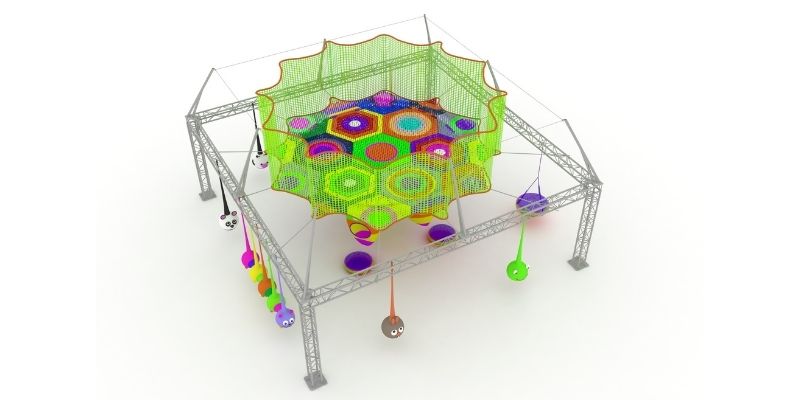
Wider circulation areas, open sightlines and a clear separation between fast-moving and calmer zones can reduce crowding and make the playground easier to manage.
A good layout also builds challenges gradually, giving children the chance to start with simpler routes before moving towards higher, bouncier or more demanding sections.
How does Ropeland fit in such requirements?
Ropeland’s crochet playgrounds and accessories were developed as a new concept in the amusement industry, designed to spark children’s imagination, orientation and sense of adventure.
The structures encourage kids to:
- Cross different levels
- Pass through tunnels
- Search for the right path
- Jump
- Swing
- Climb, and roll in a soft mesh environment
To support this type of active play, Ropeland spent almost a year developing a unique rope made from technical polyester, combining strength, softness, and long-term durability.
Check out our climbing playground equipment right now and give your little youngster the fun they deserve!
How to create a play area that is both exciting and secure
A successful net play area should give children the feeling of adventure while still making sense from a safety point of view.
Features such as climbing tunnels, suspended bridges, lookout areas, layered nets and gentle bouncing sections can make the space memorable, but each one should have a clear purpose in the overall design.

The goal is not to remove all risk, but to offer the right kind of challenge for the right age group.
Children should be able to test their balance, strength and confidence step by step.
Enclosed net areas, soft boundaries, anti-slip access points and visible resting spots can make the experience feel safer without making it boring.
It also helps to include quieter corners where children can pause and rejoin when they are ready.
This kind of design supports active play, social interaction and confidence without losing the sense of fun.
For more practical ideas on designing safe, durable, and imaginative play environments, visit Ropeland’s blog!

